


Author: Bob Brensel | President, Pharmacist | ScriptWorks
Bob Brensel, RPh, earned his Pharmacy Degree at University of the Pacific in Stockton, California in 1980. Former California Pharmacists Association’s Award Winner for Recognition of Outstanding Achievement in Compounding Pharmacy. Read More →
Summary
ScriptWorks supports California women’s health doctors and specialists when available commercial products do not meet a patient-specific prescription need. Our pharmacists collaborate with prescribers on hormone strengths, dosage forms, ingredient changes, and formulation questions. Prescribers can use our Provider Portal and Women’s Health Rx Order Forms for prescription management. We also provide local delivery and statewide California shipping.
Approximately 5 million California women are ages 40–64, an age range that encompasses much of the perimenopause and menopause transition.
Menopause-related symptoms may persist anywhere from a few months to more than 12 years, creating an ongoing need for individualized conversations about symptom management. California health-benefit data also illustrate the scale of demand: among the population analyzed by the California Health Benefits Review Program, nearly 98,900 menopause or perimenopause evaluations were estimated each month.
For prescribers, this represents a substantial and growing population of women who may benefit from having multiple medication strengths, dosage forms, and formulation options available when clinically appropriate.
Common Reasons Prescribers Contact ScriptWorks for BHRT
ScriptWorks works with California OB/GYNs, women’s health nurse practitioners, menopause-focused clinicians, primary care providers, and other licensed prescribers who may need patient-specific compounded hormone formulations.
Bioidentical hormone replacement therapy (BHRT) refers to hormone therapy that uses hormones with a chemical structure that matches hormones produced by the human body.
Menopause care often requires flexibility from one patient to the next. Prescribers may contact ScriptWorks when they need help identifying a compounded formulation that fits a patient-specific prescription need or when they have questions about available strengths, dosage forms, ingredients, or prescription logistics.
Common reasons include:
- A patient needs a strength that is not readily available.
ScriptWorks pharmacists can discuss available compounded strengths and formulation options when a prescriber identifies a patient-specific need. - A patient needs a different dosage form.
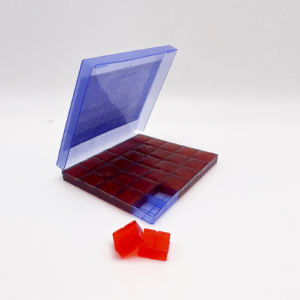
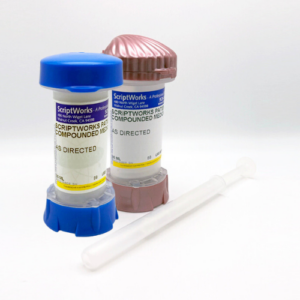
Depending on the prescription, options may include topical creams or gels, oral capsules, sublingual troches or ScriptTabs, and vaginal creams, gels, inserts, or suppositories. - A patient needs to avoid a specific inactive ingredient.
Allergies, sensitivities, or other patient-specific considerations may lead a prescriber to request a formulation without a particular excipient. - A prescribed product, strength, or dosage form is unavailable.
When availability becomes an issue, prescribers can contact ScriptWorks to discuss whether an appropriate compounded formulation may be available for a patient-specific prescription. - The prescriber has a formulation question before writing the prescription.
ScriptWorks pharmacists are available to discuss formulation feasibility, dosage forms, available concentrations, ingredient combinations, and other prescription-related questions.
For practices that regularly care for women in perimenopause and menopause, having direct access to a compounding pharmacist may provide additional support when a patient’s prescription requires a specific strength, dosage form, ingredient profile, or other formulation consideration.
How ScriptWorks Supports California Menopause Prescribers
Choosing a compounding pharmacy is about more than filling a prescription. Women’s health practices may also need responsive pharmacist communication, flexible formulation options, reliable prescription-management tools, and a pharmacy that can serve patients throughout California.
ScriptWorks has compounded medications since 2003 from our pharmacy in Walnut Creek. We have maintained ACHC and PCAB accreditation since 2012. We also maintain LegitScript certification for our online healthcare operations.

ScriptWorks supports prescribers with:
- Direct access to compounding pharmacists
Prescribers can contact our pharmacy team to discuss formulation questions, available strengths, dosage forms, ingredient considerations, and prescription logistics. - Patient-specific formulation options
Compounding may allow a prescriber to request a particular strength, dosage form, ingredient combination, or excipient profile when clinically appropriate. - A dedicated Provider Portal
The ScriptWorks Provider Portal allows practices to submit prescriptions, review patient prescription history, approve refill requests, track shipments, communicate with the pharmacy team, and access a practice-specific medication catalog.
- Statewide California shipping
ScriptWorks can ship prescriptions directly to patients or practices throughout California, allowing providers across the state to work with the same compounding pharmacy. - Local service in the East Bay
In addition to statewide shipping, weekday local delivery is available in select East Bay communities, including Walnut Creek, Concord, Martinez, San Ramon, Danville, Alamo, Lafayette, and Orinda. - More than two decades of compounding experience
ScriptWorks has compounded medications from its Walnut Creek pharmacy since 2003 and has maintained ACHC and PCAB accreditation since 2012. ScriptWorks also maintains LegitScript certification for its online healthcare operations.
For California practices caring for women in perimenopause and menopause, ScriptWorks provides a single pharmacy resource for patient-specific compounding, pharmacist collaboration, prescription-management tools, and statewide medication delivery.
Simplify Compounded Prescription Management with the ScriptWorks Provider Portal
Spend less practice time tracking compounded prescriptions. For practices that regularly prescribe compounded medications, phone calls, faxed forms, refill requests, and medication-status questions can add administrative steps.
The ScriptWorks Provider Portal gives California prescribers one place to:
- Submit prescriptions directly to our pharmacy in real time
- Access patient profiles and prescription history
- Approve refill requests
- Track shipments
- Communicate directly with our pharmacy team
- Access a practice-specific drug catalog
- Review clinic invoices
ScriptWorks pharmacists work directly with California prescribers on formulation and prescription questions on a case-by-case basis. This may include strengths, dosage forms, ingredient changes, and prescription logistics.
Prescriptions can ship directly to the patient or provider. New portal users can also schedule an onboarding tutorial. Licensed California practitioners also have the option to use our Women’s Health Rx Order Forms for frequently requested preparations.
Compounded Hormone and Dosage Form Options
Depending on the prescription and clinical need, ScriptWorks compounds women’s health preparations that may contain:
- Estradiol — Compounded estradiol may be considered for menopause-related concerns such as hot flashes, night sweats, vaginal dryness, reduced lubrication, and discomfort during intercourse, depending on the prescribed route and dosage form.
- Estriol — Compounded estriol may be considered for vaginal dryness, irritation, reduced lubrication, and discomfort during intercourse and may also be combined with estradiol in compounded hormone preparations.
- Bi-Est — Compounded Bi-Est combines estradiol and estriol and may be considered for menopause-related concerns such as hot flashes, night sweats, vaginal dryness, irritation, reduced lubrication, and discomfort during intercourse, depending on the prescribed formulation.
- Progesterone — Compounded progesterone may be included as part of a hormone regimen for patients using systemic estrogen, particularly those who still have a uterus, and may also be discussed when menopause-related sleep concerns are part of the patient’s overall evaluation.
- Testosterone — Compounded testosterone may be considered for certain postmenopausal patients experiencing persistent, bothersome low sexual desire or decreased libido after other possible contributing factors have been evaluated.
- DHEA — Compounded DHEA, particularly in vaginal preparations, may be considered for menopause-related concerns such as vaginal dryness, reduced lubrication, changes in vaginal tissue, and discomfort or pain during sexual activity.
We prepare these prescriptions in several dosage forms, including:
- Topical creams and gels
- Oral capsules
- Sublingual troches and ScriptTabs
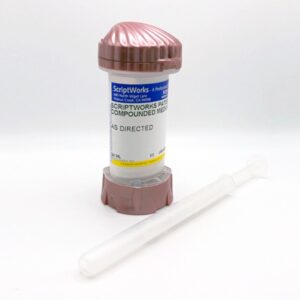
- Vaginal creams, gels, inserts, and suppositories
Have a hormone prescription you’re not sure how to formulate?
California prescribers can contact a ScriptWorks pharmacist to discuss available strengths, dosage forms, ingredient considerations, and prescription logistics.
When a Hormone Medication, Strength, or Dosage Form Is Unavailable
Medication availability can create challenges for both prescribers and patients, especially when a specific hormone product, strength, or dosage form is difficult to obtain.
When this happens, California prescribers can contact ScriptWorks to discuss whether a patient-specific compounded formulation may be available based on the prescription and clinical need.
Examples may include:
- A prescribed hormone strength that is not readily available
- A dosage form that is unavailable or on backorder
- A patient who cannot use the available commercial dosage form
- A need for a different excipient or ingredient profile
- A formulation that requires a different route of administration
ScriptWorks pharmacists can discuss available strengths, dosage forms, excipient considerations, and formulation feasibility before the prescription is submitted.
If a compounded option may be appropriate, the final medication selection, strength, route, and directions remain determined by the treating prescriber.
Have a patient been affected by a hormone product shortage or unavailable dosage form?
Shipping Compounded Hormone Prescriptions Throughout California
ScriptWorks supports women’s health specialists and their patients across California through both local delivery and statewide shipping:
- Weekday local delivery: Available in select East Bay communities, including Walnut Creek, Concord, Martinez, San Ramon, Danville, Alamo, Lafayette, and Orinda.
- Statewide overnight shipping: ScriptWorks ships prescriptions throughout California directly to patients and practices, from Northern California to Southern California.
SCRIPTWORKS
DELIVERS.
Patient prescriptions arrive when they need them.
Get medications faster with ScriptWorks.
Weekday Local Deliveries
Walnut Creek, Concord, Martinez, San Ramon, Danville, Alamo, Lafayette and Orinda.

USPS 1st Priority Mail
Overnight Mail Delivery
California (state-wide)
At-Home Testing Resources
ScriptWorks offers select at-home testing options that prescribers may choose to incorporate into a broader clinical evaluation. Test selection, interpretation, and use should be determined by the treating healthcare provider.

Frequently Asked Questions About Hormone Replacement and Compounding
When might a prescriber consider a compounded hormone medication for a menopause patient?
A prescriber may consider compounding when a patient’s clinical needs cannot be met by an appropriate commercially available medication, such as when a different strength, dosage form, or excipient profile is needed.
Why might a prescriber request a compounded dosage form or strength?
Compounding may allow a prescriber to request a formulation that is not commercially available or to exclude an ingredient that is not appropriate for a particular patient.
What hormones are commonly included in compounded menopause prescriptions?
Compounded prescriptions may include ingredients such as estradiol, estriol, progesterone, testosterone, DHEA, or combinations of hormones, depending on the prescription. The appropriate ingredient, strength, route, and combination are determined by the prescriber.
What symptoms might a compounded estradiol cream be prescribed for?
The answer depends on where the cream is intended to be applied and whether the prescriber intends local or systemic use.
A prescriber evaluating systemic estrogen therapy may be addressing symptoms such as:
- Hot flashes
- Night sweats
- Sleep interruption associated with night sweats
A vaginally administered estrogen preparation may instead be considered for symptoms associated with genitourinary changes during menopause, including:
- Vaginal dryness
- Vaginal burning or irritation
- Reduced vaginal lubrication
- Discomfort or pain during sex
- Certain urinary symptoms associated with menopause
The route, concentration, and directions for use are important because different preparations may have different absorption characteristics.
What is estriol, and what menopause symptoms might lead a prescriber to consider it?
Estriol is one of the estrogens produced by the body and is sometimes included in compounded hormone prescriptions.
Depending on the prescription and route of administration, it may be considered in patients experiencing concerns such as:
- Vaginal dryness
- Vaginal burning or irritation
- Reduced lubrication
- Discomfort during intercourse
Estriol may also be combined with estradiol in compounded preparations commonly referred to as Bi-Est.
What is Bi-Est, and what symptoms might it be prescribed for?
“Bi-Est” generally refers to a compounded preparation containing two estrogens, commonly estradiol and estriol. The ratio and total concentration may vary according to the prescription.
Depending on the route and the prescriber’s clinical intent, Bi-Est may be considered when evaluating concerns such as:
- Hot flashes
- Night sweats
- Menopause-related vaginal dryness
- Vaginal irritation
- Reduced lubrication
- Pain or discomfort with sexual activity
For example, a patient whose primary concern is persistent hot flashes may have different formulation considerations than a patient whose primary concern is vaginal dryness.
The prescriber determines whether a compounded combination may be appropriate for the individual patient.
Why might progesterone be included in a menopause hormone prescription?
For some patients who still have a uterus and are using systemic estrogen, a prescriber may include progesterone as part of the overall hormone regimen.
For example, a patient may be receiving estrogen after discussing concerns such as:
- Hot flashes
- Night sweats
- Sleep disruption associated with nighttime symptoms
Progesterone may be included because of the patient’s anatomy and overall hormone regimen rather than because it is intended to address each of those symptoms directly.
The appropriate dose, route, and schedule should be determined by the prescriber.
What menopause-related concerns might lead a provider to consider compounded testosterone?
A provider may consider testosterone for certain postmenopausal patients experiencing persistent, bothersome changes in sexual desire or low libido, especially when the change is causing personal distress.
Before prescribing testosterone, the provider may also consider other possible contributors, such as:
- Vaginal dryness or painful intercourse
- Medication side effects
- Sleep concerns
- Mood changes
- Relationship factors
- Other medical conditions
If compounded testosterone is prescribed, the strength, dosage form, directions, and monitoring plan should be determined by the prescriber based on the individual patient’s needs.
What is DHEA, and what menopause symptoms might lead a provider to discuss it?
DHEA, or dehydroepiandrosterone, is a hormone produced naturally by the body and may appear in some hormone prescriptions.
When vaginal DHEA is discussed in menopause care, it may be in connection with concerns such as:
- Vaginal dryness
- Reduced lubrication
- Changes in vaginal tissue
- Discomfort or pain during sexual activity
Whether DHEA may be appropriate depends on the patient’s symptoms, medical history, route of administration, and the prescriber’s clinical judgment.
Can several hormones be combined into one compounded prescription?
A prescriber may request a preparation containing more than one active ingredient when clinically appropriate and permitted under applicable compounding requirements. The specific ingredients, concentrations, and dosage form depend on the prescription.
Are hormone levels used to determine the exact compounded dose a patient needs?
Laboratory testing may be one component of a patient’s clinical evaluation. ScriptWorks offers select at-home testing options that a prescriber may choose to incorporate into patient care. Test selection, interpretation, and use should be determined by the treating healthcare provider.
What information should a prescriber include on a compounded hormone prescription?
Depending on the medication and applicable requirements, a prescription may specify the active ingredient or ingredients, strength, dosage form, quantity, and directions for use. The compounding pharmacy may also communicate with the prescriber’s office when clarification is needed.
How does a compounding pharmacy work with menopause care providers?
ScriptWorks is a compounding pharmacy that prepares medications according to valid prescriptions and applicable compounding requirements. Our pharmacists may also communicate with prescribers regarding available dosage forms, formulation considerations, excipients, and prescription clarification. Decisions about whether hormone therapy may be appropriate and which medication to prescribe remain with the treating healthcare provider.
Reference
- American College of Obstetricians and Gynecologists. (2023). Compounded bioidentical menopausal hormone therapy: ACOG Clinical Consensus No. 6. Obstetrics & Gynecology, 142(5), 1266–1273. Link