


Author: Bob Brensel | President, Pharmacist | ScriptWorks
Bob Brensel, RPh, earned his Pharmacy Degree at University of the Pacific in Stockton, California in 1980. Former California Pharmacists Association’s Award Winner for Recognition of Outstanding Achievement in Compounding Pharmacy. Read More →
Key Takeaways
- Why progesterone matters during perimenopause: Fluctuating progesterone levels are part of the hormonal changes associated with irregular menstrual cycles, sleep disturbances, and other perimenopausal symptoms.
- Potential benefits supported by research: Clinical studies have explored oral micronized progesterone for sleep quality and night sweats, with promising findings for certain patient-reported symptoms. Results depend on the formulation and clinical circumstances.
- When compounded progesterone may be considered: Prescribers may explore customized strengths, alternative dosage forms, or specific ingredient requirements when commercially available medications cannot meet a patient’s individual needs.
- For California prescribers: ScriptWorks Pharmacy offers compounded progesterone preparations, including slow-release capsules and sublingual/buccal troches, with pharmacist support for patient-specific prescription requirements.
- For California patients: Discuss progesterone options with your healthcare provider and contact ScriptWorks Pharmacy to learn about available formulations, prescriptions, and California delivery options.
California had about 1.2 million women ages 45 to 49 in 2024, according to federal population estimates. Those years overlap with the age when perimenopause often begins. One night you’re changing a damp shirt at 3 AM. The next morning you’re packing lunches or leading a meeting on a few broken hours of sleep. Then your period shows up two weeks earlier than you expected. If several things have changed at once, it can be hard to know what to bring up first.
Perimenopause can affect your sleep, mood, and menstrual cycle while you’re still having periods. Studies of oral micronized progesterone offer some clues about sleep and night sweats. A compounded progesterone cream is a separate prescription option that your clinician may consider when a commercially available product cannot meet a specific need.
What does perimenopause feel like in everyday life?
Perimenopause is the transition around the final menstrual period. Cycles may get shorter or longer, and some months you may skip a period entirely. Menopause is recognized after 12 consecutive months without a period when there’s no other explanation. The STRAW+10 research consensus on reproductive aging describes changes in cycle length as an early sign of the transition, with longer gaps more common later. Keeping a spare change of clothes or checking a calendar before a trip can become part of managing that unpredictability.
Broken sleep can follow you into the next day
Even after the sweating stops, getting back to sleep can be its own struggle. In the multiethnic Study of Women’s Health Across the Nation (SWAN), difficulty staying asleep was the most frequently reported sleep problem. Sleep complaints became more common as women moved through the transition, and hot flashes and night sweats were associated with more sleep difficulty.
Changes in mood and work can feel personal
It can be unsettling to feel less like yourself after another poor night, or to lose your train of thought in a conversation you normally handle with ease. One longitudinal SWAN study of mood found that major depressive episodes were more likely during perimenopause than before it. A separate Mayo Clinic survey of working women ages 45 to 60 linked more severe menopause symptoms with greater disruption at work. Persistent low mood, anxiety, or exhaustion is worth mentioning in its own right so your clinician can consider other contributors and discuss what might help.

How does progesterone work in the body?
After ovulation, the follicle that released the egg becomes a temporary structure called the corpus luteum. It makes progesterone. In the uterus, progesterone binds to receptors in the endometrium and helps the lining that estrogen built mature in preparation for a possible pregnancy. If pregnancy doesn’t occur, progesterone and estrogen levels fall and the lining sheds. During perimenopause, ovulation can become less predictable, so the usual rise and fall of progesterone can vary from cycle to cycle.
Some progesterone is converted into allopregnanolone, which enhances signaling at GABA-A receptors in the brain. GABA helps dial down nerve-cell activity. Researchers study this pathway in relation to sleep, including how oral progesterone is metabolized. See the review of progesterone physiology and the systematic review of progesterone and sleep.
Figure. Two roles of progesterone in the body after ovulation. Source: Kolatorova et al. (2022).
What is compounded BHRT, and how can it be personalized?
Compounded bioidentical hormone replacement therapy (BHRT) uses hormones such as progesterone and estradiol that have the same molecular structure as hormones the body makes. A compounding pharmacy prepares the medication for an individual patient using the prescriber’s instructions. Compounded hormone preparations are not FDA-approved.
What can be customized?
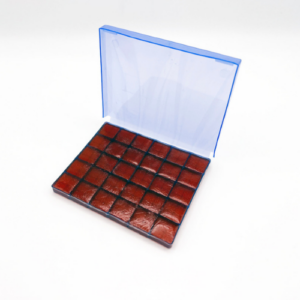
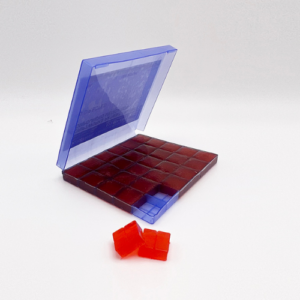
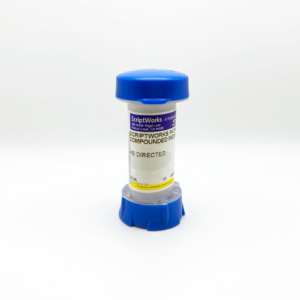
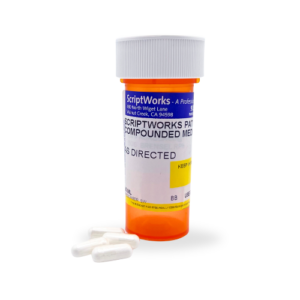
The prescriber and pharmacist can discuss the hormone strength, dosage form, and inactive ingredients. For someone who has trouble swallowing capsules, that might mean asking whether a progesterone troche, a lozenge that dissolves in the mouth, fits the plan. If an inactive ingredient causes an allergy, the pharmacist can discuss formulating without that ingredient. Other prescription examples at ScriptWorks include topical hormone creams and compounded slow-release progesterone capsules. The prescriber determines which form fits the health goal, since the route affects how the hormone is absorbed and metabolized.
How does ScriptWorks help?
The ScriptWorks women’s hormone therapy team can work with your prescriber to review formulation options and help you understand how to measure, apply, or take the medication you’re prescribed. If you’re discussing progesterone for perimenopause, tell your prescriber about any ingredient allergies, difficulty taking medicines, or concerns about using a prescription consistently.
What have studies found about progesterone for perimenopause?
The findings below distinguish the research on oral micronized progesterone from the questions clinicians consider about prescribed cream. The dose, route, and formulation matter when interpreting a study.
| Concern | What the evidence says |
|---|---|
| Trouble falling asleep | A systematic review of randomized trials found shorter time to fall asleep in a pooled analysis of micronized progesterone. Most studies involved postmenopausal women. |
| Night sweats and disrupted sleep | In a randomized trial of 189 perimenopausal women, participants taking oral micronized progesterone reported fewer night sweats and better sleep quality than those taking placebo. The trial did not find a statistically significant difference on its primary combined hot flash and night sweat score. A separate trial in early postmenopause found an improvement in that combined score with oral micronized progesterone. |
| Irregular periods | Changes in ovulation can make periods unpredictable. The trials above do not establish that a progesterone cream regulates periods. Your prescriber can use your bleeding history to decide which tests or options are appropriate. |
What should you bring up with your prescriber?
Tell your prescriber which symptom affects your day most. For a few weeks, jot down when you wake up, when night sweats happen, and when and how heavily you bleed. Mention very heavy or prolonged bleeding, bleeding between periods, or bleeding after 12 months without a period. See ACOG’s guide to perimenopausal bleeding. If you have a uterus and use systemic estrogen, ask what will protect your uterine lining. Skin-applied progesterone cream should not be relied on for that protection.
ScriptWorks is a PCAB-accredited compounding pharmacy in Walnut Creek, California, with more than two decades of compounding experience. If your prescriber recommends a customized formulation, contact ScriptWorks to discuss formulation options and how to send a patient-specific prescription. Prescription shipping is available to California addresses.
References
American College of Obstetricians and Gynecologists’ Committee on Clinical Consensus–Gynecology (2023). Compounded bioidentical menopausal hormone therapy: ACOG Clinical Consensus No. 6. Obstetrics & Gynecology, 142(5), 1266–1273. Link
Bromberger, J. T., Kravitz, H. M., Chang, Y.-F., Cyranowski, J. M., Brown, C., & Matthews, K. A. (2011). Major depression during and after the menopausal transition: Study of Women’s Health Across the Nation (SWAN). Psychological Medicine, 41(9), 1879–1888. Link
Faubion, S. S., Enders, F., Hedges, M. S., Chaudhry, R., Kling, J. M., Shufelt, C. L., Saadedine, M., Mara, K., Griffin, J. M., & Kapoor, E. (2023). Impact of menopause symptoms on women in the workplace. Mayo Clinic Proceedings, 98(6), 833–845. Link
Harlow, S. D., Gass, M., Hall, J. E., Lobo, R., Maki, P., Rebar, R. W., Sherman, S., Sluss, P. M., & de Villiers, T. J. (2012). Executive summary of the Stages of Reproductive Aging Workshop + 10: Addressing the unfinished agenda of staging reproductive aging. Fertility and Sterility, 97(4), 843–851. Link
Hitchcock, C. L., & Prior, J. C. (2012). Oral micronized progesterone for vasomotor symptoms—A placebo-controlled randomized trial in healthy postmenopausal women. Menopause, 19(8), 886–893. Link
Kolatorova, L., Vitku, J., Suchopar, J., Hill, M., & Parizek, A. (2022). Progesterone: A steroid with wide range of effects in physiology as well as human medicine. International Journal of Molecular Sciences, 23(14), Article 7989. Link
Kravitz, H. M., Zhao, X., Bromberger, J. T., Gold, E. B., Hall, M. H., Matthews, K. A., & Sowers, M. R. (2008). Sleep disturbance during the menopausal transition in a multi-ethnic community sample of women. Sleep, 31(7), 979–990. Link
Nolan, B. J., Liang, B., & Cheung, A. S. (2021). Efficacy of micronized progesterone for sleep: A systematic review and meta-analysis of randomized controlled trial data. The Journal of Clinical Endocrinology & Metabolism, 106(4), e942–e951. Link
Prior, J. C., Cameron, A., Fung, M., Hitchcock, C. L., Janssen, P., Lee, T., & Singer, J. (2023). Oral micronized progesterone for perimenopausal night sweats and hot flushes: A phase III Canada-wide randomized placebo-controlled 4 month trial. Scientific Reports, 13(1), Article 9082. Link
Stute, P., Neulen, J., & Wildt, L. (2016). The impact of micronized progesterone on the endometrium: A systematic review. Climacteric, 19(4), 316–328. Link