


Author: Bob Brensel | President, Pharmacist | ScriptWorks
Bob Brensel, RPh, earned his Pharmacy Degree at University of the Pacific in Stockton, California in 1980. Former California Pharmacists Association’s Award Winner for Recognition of Outstanding Achievement in Compounding Pharmacy. Read More →
Mitochondrial Dysfunction, Cognitive Health, and the Research Surrounding Potential Methylene Blue Benefits
Feeling unusually tired or mentally slowed down can be frustrating. If it continues without a clear explanation, it becomes something to mention during a checkup. As time goes on, some may notice that low energy, forgetfulness, or trouble focusing seem to overlap. These patterns often feel connected, which is why many wonder whether something deeper might be at work.
Researchers have been studying whether these everyday experiences relate to how the mitochondria handle cellular energy. This growing interest has also led to renewed attention to compounds like methylene blue and their exploration in scientific discussions of metabolic and neurological function.
Understanding Your Mitochondria
You eat food for energy, and that process starts when your body breaks down nutrients like carbohydrates and proteins. After being converted into smaller molecules, they enter your cells. Then they move into energy-producing pathways. These smaller components help form adenosine triphosphate (ATP), your cell’s energy currency supporting many everyday processes.
So where do mitochondria come into play? They act like tiny power plants inside your cells, creating most of the ATP your body uses each day. Understanding their role may help explain why shifts in energy production show up in different parts of daily life.
That said, a dysfunction in the mitochondria may be associated with many major diseases.
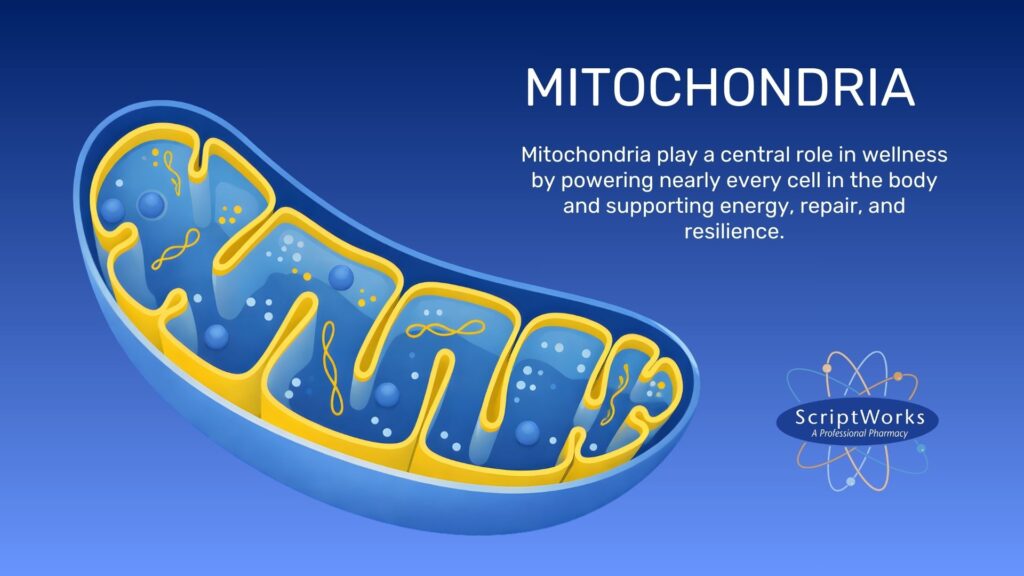
What Happens When Mitochondria Struggle
When mitochondria face ongoing stress, the way they manage cellular energy may shift. Even small changes in efficiency may influence how cells function. As a result, researchers have examined mitochondrial abnormalities in several health conditions. These patterns help explain why the topic continues to draw scientific interest.
What Is Mitochondrial Dysfunction?
Mitochondrial dysfunction refers to the impaired ability of mitochondria to:
- Generate adequate adenosine triphosphate (ATP) (cellular energy),
- Regulate oxidative stress, or
- Support cell signaling, growth, and survival.
This dysfunction may occur in isolated cells or affect multiple systems, depending on severity and cause.

Possible Causes of Mitochondrial Dysfunction
Genetic Mutations
- mtDNA mutations (mitochondrial DNA): Can be inherited maternally or occur spontaneously.
- nDNA mutations (nuclear DNA): Affect proteins imported into mitochondria.
- These mutations may impair proteins in the electron transport chain (ETC) or enzymes required for mitochondrial maintenance.
Source: Signal Transduction and Targeted Therapy
Oxidative Stress
- Excess production of reactive oxygen species (ROS) can damage mitochondrial membranes, proteins, and DNA.
- ROS may accumulate due to:
- Environmental toxins
- Inflammation
- Radiation exposure
- Aging
Source: International Journal of Molecular Science
Environmental Toxins / Drugs
- Certain toxins or drugs may damage mitochondria or inhibit respiratory chain enzymes, such as:
- Pesticides (e.g., rotenone, paraquat)
- Alcohol
- Antibiotics (e.g., chloramphenicol)
- Antiretrovirals (e.g., nucleoside reverse transcriptase inhibitors)
Source: Current Environmental Health Reports
Nutrient Deficiencies
- Mitochondrial function depends on cofactors and nutrients such as:
- Coenzyme Q10 (ubiquinone)
- B vitamins (especially B1, B2, B3, B5)
- L-carnitine
- Magnesium
- Alpha-lipoic acid
- Deficiencies may impair ATP production or increase oxidative burden.
Source: Clinical Nutrition
Aging
- With age, mitochondrial DNA accumulates damage and mutations.
- Efficiency of the respiratory chain may decline, and mitophagy (mitochondrial recycling) becomes less effective.
Source: Frontiers in Physiology
“Mitochondrial damage is implicated as a major contributing factor for a number of noncommunicable chronic diseases such as cardiovascular diseases, cancer, obesity, and insulin resistance/type 2 diabetes.”Source: Endocrine Reviews
A wide range of seemingly unrelated disorders have underlying pathophysiological mechanisms in common, namely reactive oxygen species (ROS) production, the accumulation of mitochondrial DNA (mtDNA) damage, resulting in mitochondrial dysfunction:
- Schizophrenia
- Bipolar disease
- Dementia
- Alzheimer’s disease
- Epilepsy
- Migraine headaches
- Strokes
- Neuropathic pain
- Parkinson’s disease
- Ataxia
- Transient ischemic attack
- Cardiomyopathy
- Coronary artery disease
- Chronic fatigue syndrome
- Fibromyalgia
- Retinitis pigmentosa
- Diabetes
- Hepatitis C
- Primary biliary cirrhosis
- More
How Mitochondria May Affect Cognitive Function
When someone has cognitive impairment, their ability to think, learn, remember, use judgment, and make decisions is affected, often by an underlying condition.
In the context of mitochondrial dysfunction, some researchers have explored how immune activity and brain function interact. In a study involving schizophrenia, investigators observed an association between peripheral mitochondrial irregularities and cognitive impairment, with inflammation appearing to play a possible mediating role.
“The complex immune-brain interactions and the regulatory role of mitochondria in the immune response suggest that mitochondrial damage reported in schizophrenia (SZ) may be related to abnormalities observed in immune and brain functions.”
Source: Schizophrenia Bulletin
How Mitochondria May Shape Memory Over Time
Forgetting things like where you placed your keys last time is normal. But persistent forgetfulness may be caused by an underlying condition like dementia.
Memory loss often involves changes in how the brain stores, organizes, and retrieves information. Thus, researchers continue to study the biological factors that may shape these processes. In studies involving Alzheimer’s disease, investigators explored the idea that mitochondrial dysfunction may be involved in several features seen in the condition, including oxidative stress, inflammation, and disruptions in normal protein processing.
“The underlying pathogenesis is complex, but a growing body of evidence implicates mitochondrial dysfunction as a common pathomechanism involved in many of the hallmark features of the Alzheimer’s Disease brain.”
Source: International Journal of Molecular Sciences
How Mitochondria May Relate to Fibromyalgia Symptoms
Fibromyalgia is a chronic condition involving body-wide pain, along with fatigue. A person with this condition may also experience problems with mood, memory, and sleep.
Some researchers examined whether fibromyalgia symptoms may relate to shifts in mitochondrial activity. In one study, investigators observed differences in ATP-related patterns within certain cells. They suggested these changes may be part of a broader process they are still working to understand.
“Symptoms associated with Fibromyalgia, such as fatigue, exercise intolerance, and myalgia, are common in primary mitochondrial diseases.”
Source: Scientific Reports
Potential Methylene Blue Benefits in Mitochondrial Dysfunction: Cognition, Memory, & More
Mitochondrial dysfunction has become an area of growing clinical interest, particularly in patients experiencing issues related to energy metabolism, oxidative stress, or age-related cellular decline. As awareness increases, more healthcare practitioners are exploring therapeutic strategies that may support mitochondrial function. Among the options being considered, methylene blue has gained attention for its redox-modulating properties and potential interaction with the mitochondrial electron transport chain.

Methylene blue is a drug with a long medical history. In recent years, it has gained renewed attention in research focused on cellular energy and oxidative stress. Preliminary research suggests that methylene blue may help facilitate electron transfer in compromised mitochondria, which has led some prescribers to consider its use in carefully selected patients. While further clinical evidence is needed, the interest in methylene blue reflects a broader shift toward investigating innovative tools that may support cellular energy dynamics in the context of mitochondrial challenges.

At a structural level, research highlighted several features linked to methylene blue that may give it an advantage:
- Small molecular weight with both hydrophilic and lipophilic properties, which may help it move through different tissues once absorbed.
- Possible interaction with the mitochondrial electron transport chain, explored in studies evaluating how cells manage energy.
- Potential influence on oxidative stress and respiration, observed under certain experimental conditions.
Researchers have also examined several possible methylene blue benefits, including:
- Neuroprotection: Methylene Blue has been described with possible antioxidant and anti-inflammatory properties.
- Anti-Aggregation: Research noted the drug’s possible role in addressing the build-up of amyloid plaques and neurofibrillary tangles.
- Cognitive Pathways: In preliminary trials and animal studies, it’s being explored whether it may influence certain cognitive processes, including memory.
Who May Prescribe Methylene Blue
Prescribers may explore possible methylene blue benefits during evaluations. This may happen when a patient’s concerns relate to mitochondrial function or cognitive changes.
- Neurologists: They assess conditions involving memory, cognition, and neurological energy use, making them central to discussions about mitochondrial function.
- Neuropsychiatrists: These specialists work where mood, cognition, and brain function intersect, so they may explore metabolic factors in complex cognitive presentations.
- Integrative Medicine Physicians: They often evaluate whole-system patterns, including oxidative stress and cellular energy, and may discuss methylene blue within broader metabolic frameworks.
- Authorized Clinicians: These providers may prescribe methylene blue when it aligns with a patient’s health profile and ongoing monitoring needs or care plans.
We make it easy to send in prescriptions for compounded medications with
Rx Order Forms with ScriptWorks Exclusive Formulas
Licensed prescribers in California enhance their patients’ experience with personalized medications. Easily select options based on patient needs.
When Patients May Benefit From Methylene Blue
Patients with Persistent Cognitive or Neurological Complaints
Some patients come in describing issues that are hard to quantify on paper — brain fog, memory lapses, or slowed processing. They may have tried dietary changes, supplements, or even stimulant medications, but still feel mentally “dimmed.” These individuals may have underlying oxidative stress or mitochondrial inefficiencies contributing to their cognitive symptoms. In such cases, some practitioners are exploring whether supporting mitochondrial redox balance — including the use of methylene blue — may offer an additional layer of care.
Patients Struggling with Chronic Fatigue or Energy Deficits
There are also those who describe deep, unexplained fatigue. Not just tired — but fundamentally low on cellular energy. They may not meet criteria for any specific diagnosis, but their quality of life is compromised. These patients often respond well to a mitochondrial health workup, and some providers are now including methylene blue in their discussions, given its potential role in supporting electron transport within compromised mitochondria.
Patients with a History of Environmental or Toxic Exposures
Practitioners may also see patients who’ve had exposure to mold, heavy metals, or other environmental toxins — and who now present with a constellation of symptoms that defy conventional categories. Mitochondria are particularly vulnerable to oxidative and toxic stress, and in these cases, some clinicians are incorporating redox-modulating compounds such as methylene blue into personalized protocols, based on clinical judgment.
Aging Patients with Slowing Recovery or Resilience
As patients age, many begin to notice slower recovery from illness, physical exertion, or mental strain. This can be subtle at first — a workout that lingers for days, or a stressful week that takes longer to bounce back from. These patterns may reflect age-related declines in mitochondrial efficiency. Some providers are beginning to consider whether methylene blue may offer supportive value for older adults with mitochondrial sluggishness, as part of a broader approach to healthy aging.
Patients Who Have Tried Everything and Still Feel Stuck
And then there’s the patient who’s done it all — the one who has dialed in nutrition, exercise, stress management, and supplements, but still feels unwell. For these individuals, it may be worth looking at the final common pathway of energy: the mitochondria. Methylene blue, while not a catch-all solution, has emerged as an option some prescribers consider when conventional approaches haven’t yielded the expected improvement — especially when mitochondrial involvement is suspected.
Quality of Compounded Methylene Blue Capsules is Important
Methylene blue appears in several areas of medicine, but when a prescriber chooses a capsule form, patients often discover it isn’t stocked in traditional retail pharmacies. This is because no drug manufacturer currently produces methylene blue capsules commercially.
For this reason, capsules must be prepared by a compounding pharmacy. ScriptWorks holds PCAB accreditation and has decades of experience handling high-purity ingredients.
At ScriptWorks, methylene blue is available in capsule form and prepared to meet and exceed standards. If you’re a California prescriber exploring Methylene Blue for appropriate patient cases, our team is available to support your compounding needs.