


Author: Bob Brensel | President, Pharmacist | ScriptWorks
Bob Brensel, RPh, earned his Pharmacy Degree at University of the Pacific in Stockton, California in 1980. Former California Pharmacists Association’s Award Winner for Recognition of Outstanding Achievement in Compounding Pharmacy. Read More →
Summary
ScriptWorks is a California compounding pharmacy that prepares provider-directed hormone prescriptions for patients experiencing perimenopause or menopause.
This guide explains:
- Common BHRT ingredients, including estradiol, progesterone, testosterone, DHEA, estriol, and Bi-Est
- Available dosage forms, including creams, gels, capsules, troches, ScriptTabs, suppositories, and vaginal preparations
- Questions patients may wish to discuss with their prescriber or pharmacist
Compounded hormone medications require a prescription from a licensed healthcare provider and are not FDA-approved. Patients should discuss potential risks, alternatives, and available FDA-approved options with their prescriber.
Understanding Perimenopause and Menopause
Menopause generally begins after 12 consecutive months without a menstrual period. Perimenopause is the transition leading up to menopause, while postmenopause refers to the years that follow.

Common menopause-related symptoms may include hot flashes, night sweats, sleep changes, mood changes, and vaginal dryness. A healthcare provider may discuss hormone therapy after reviewing the patient’s symptoms, health history, current medications, and individual risk factors.
What Are HRT and BHRT?
Hormone replacement therapy, or HRT, involves hormone medication that a healthcare provider may prescribe after reviewing a patient’s symptoms, health history, current medications, and risk factors. Depending on the patient, a prescription may include estrogen, progesterone, testosterone, or other hormone-related ingredients.
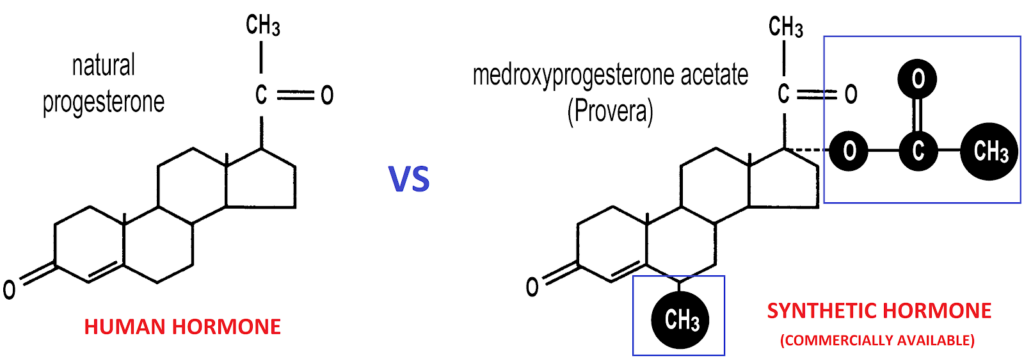
Bioidentical hormone replacement therapy, commonly called BHRT, refers to hormones that are chemically or structurally identical to hormones produced by the body. The FDA has approved some bioidentical hormone medications, while compounding pharmacies prepare others according to individual prescriptions.
For a compounded prescription, the prescriber may specify the ingredient or combination, strength, dosage form, route, base, and directions. ScriptWorks prepares the medication according to those instructions.
Common BHRT Ingredients and Compounded Forms
The following table provides a brief overview of ingredients and combinations that may appear in compounded hormone prescriptions.
| Hormone or combination | General role in the body | Forms a prescriber may request |
|---|---|---|
| Estradiol | Estradiol is the primary form of estrogen during the reproductive years. Estrogen plays a role in reproductive function, menstrual-cycle regulation, bone maintenance, and other estrogen-responsive tissues throughout the body. | Creams, gels, capsules, troches, ScriptTabs, and vaginal preparations |
| Progesterone | Progesterone helps regulate the menstrual cycle and prepares the uterine lining for a possible pregnancy. It also plays an important role in supporting pregnancy. | Capsules, creams, gels, troches, ScriptTabs, and vaginal suppositories |
| Testosterone | Testosterone is produced in both women and men. In women, it participates in androgen signaling involving reproductive function, sexual function, bone remodeling, muscle tissue, and other body systems. | Creams, gels, troches, and ScriptTabs |
| DHEA | DHEA, or dehydroepiandrosterone, is produced mainly by the adrenal glands. It functions primarily as a precursor that the body can convert into androgens and estrogens. | Capsules, creams, troches, ScriptTabs, and vaginal preparations |
| Estriol | Estriol is one of the naturally occurring estrogens in the body and is produced in larger amounts during pregnancy. Like other estrogens, it participates in estrogen signaling in reproductive and other estrogen-responsive tissues. | Creams, gels, troches, ScriptTabs, and vaginal preparations |
| Bi-Est | Bi-Est is a compounded combination of estradiol and estriol, so its components participate in estrogen signaling. The prescriber specifies the ratio, strength, route, and dosage form. | Creams, gels, capsules, troches, ScriptTabs, and vaginal preparations |
How Does a Menopause Hormone Compounding Pharmacy Support a Prescription?
A compounding pharmacy prepares medication according to a licensed prescriber’s instructions. A prescriber may consider a compounded medication when a commercially available product does not meet a documented patient-specific prescription need.
For Prescribers:
A compounded hormone prescription may identify:
- Hormone ingredient or combination
- Strength or concentration
- Dosage form and route
- Base, release profile, or flavor when applicable
- Directions, quantity, and refills
- Patient-specific ingredient considerations
How Do Compounded Hormone Dosage Forms Differ?
Each dosage form has different administration, storage, and handling instructions. Patients should use only the form and route on the prescription label. They should contact their pharmacist or prescriber when directions are unclear.
Transdermal BHRT Creams and Gels
Patients apply transdermal creams and gels to the skin, allowing the body to absorb the medication without first passing it through the digestive system. Patients should follow the prescribed application location, amount, and schedule.
BHRT Capsules
Patients take capsules by mouth according to the prescription label. The prescription may specify the ingredient, strength, schedule, and release profile.
BHRT Troches and ScriptTabs
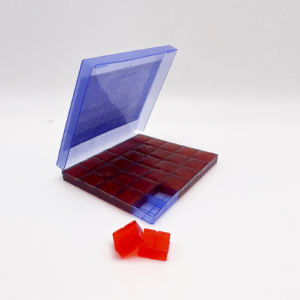
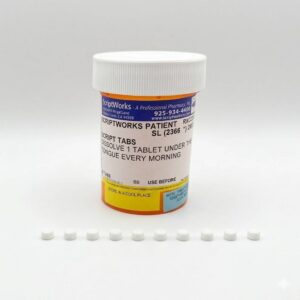
Troches and ScriptTabs dissolve in the mouth. Depending on the prescription, patients place them under the tongue or inside the cheek. Placement and dissolution instructions may differ between preparations.
Vaginal Preparations
For vaginal dryness, irritation, or discomfort, a healthcare provider may prescribe a preparation for direct vaginal use.
Available forms may include:
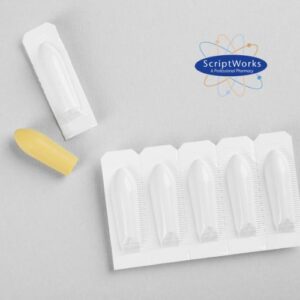
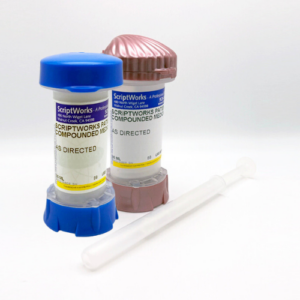
- Suppositories, inserts, and vaginal tablets: Solid forms that patients place vaginally as directed
- Vaginal creams: Cream-based preparations used with or without an applicator, according to the prescription
- Vaginal gels: Gel-based preparations prescribed for vaginal application
Instructions differ by dosage form. The prescriber selects the ingredient, strength, and dosage form. The ScriptWorks pharmacy team explains how to use the prescribed preparation.
Questions Patients Should Ask
Before using a compounded hormone prescription, patients may wish to ask:
- Why did my prescriber select this hormone, dosage form, and route?
- How should I use and store the medication?
- Could the medication interact with my current prescriptions or supplements?
- Which side effects or symptoms should I report?
- What should I do if I miss a dose?
- When should I schedule follow-up care?
Patients should follow the prescription label exactly and contact their pharmacist or prescriber when directions are unclear.
ScriptWorks Compounding Pharmacy Support in California
ScriptWorks is located in Walnut Creek and has prepared compounded prescriptions since 2003. We serve patients and prescribers throughout California. We offer weekday local delivery to nearby communities, including Walnut Creek, Concord, Martinez, San Ramon, Danville, Alamo, Lafayette, and Orinda, along with statewide overnight mail delivery.
As a PCAB-accredited pharmacy, we work with California specialists to support provider-guided care through compounding. In BHRT prescriptions, custom details may include:
- Dosage form, such as creams, gels, troches, ScriptTabs, capsules, or vaginal suppositories
- Custom strength
- Ingredient profile, when appropriate
- Combination hormone formulation, when appropriate
- Base selection for creams, gels, or vaginal preparations
- Flavor considerations for troches or other mouth-dissolving forms
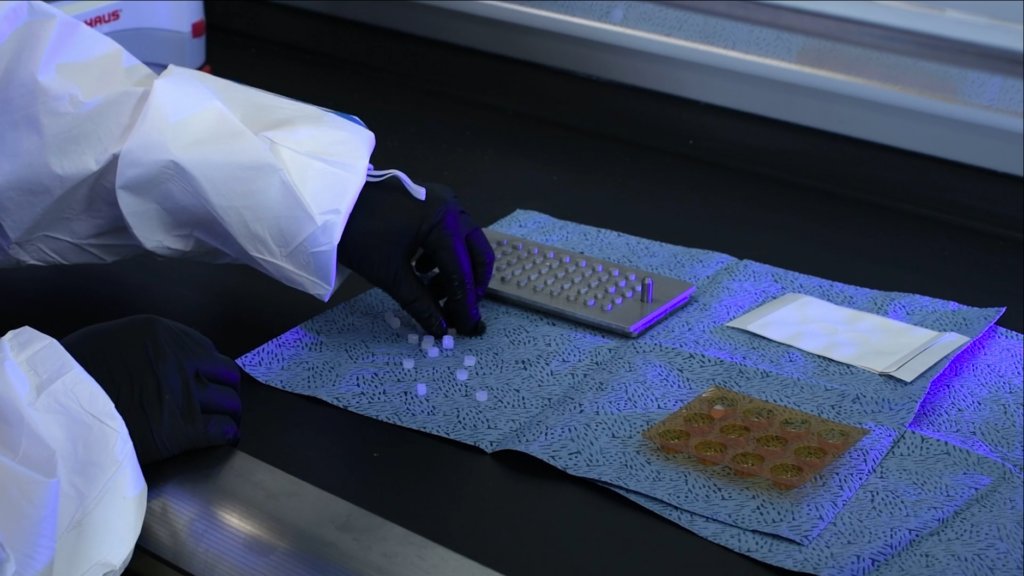
Have questions about a women’s BHRT prescription? Contact our pharmacy team to understand dosage forms, label directions, refill options, storage, and how compounding works.
ScriptWorks’ provider resources make it easy to support women throughout their journey.
We make it easy to send in prescriptions for compounded medications with
Rx Order Forms with ScriptWorks Exclusive Formulas
Licensed prescribers in California enhance their patients’ experience with personalized medications. Easily select options based on patient needs.
Please note: Our Rx Order Forms are exclusive to California medical practitioners.
If you’d like to access these tools, please contact us for password.
Our Provider Portal offers a direct way to submit compounded prescriptions, manage refills, support adherence monitoring, and connect with our pharmacy team.
Whether a patient is reviewing a current prescription or a prescriber is preparing to send one in, ScriptWorks offers pharmacy support for provider-guided women’s hormone care in California.
Important Note About Compounded Hormone Medications
ScriptWorks prepares compounded medications according to prescriptions from licensed healthcare providers. The FDA does not evaluate compounded medications for safety, effectiveness, or quality in the same manner as FDA-approved products. Patients should discuss risks, benefits, alternatives, and directions with their healthcare provider before starting or changing hormone therapy.
Frequently Asked Questions About BHRT and Menopause Prescriptions
What is BHRT, and how is it different from HRT?
HRT is a broad term for hormone replacement therapy. BHRT refers to hormone medications that are chemically or structurally identical to hormones produced by the body. Some bioidentical hormone medications are FDA-approved, while others are prepared by compounding pharmacies according to an individual prescription.
Can BHRT be prescribed during perimenopause?
A healthcare provider may discuss hormone therapy during perimenopause after reviewing the patient’s symptoms, medical history, current medications, risk factors, and preferences. A clinical evaluation is important because symptoms such as irregular bleeding, sleep changes, and mood changes may have multiple causes.
Are compounded bioidentical hormones FDA-approved?
No. The FDA does not approve or review compounded hormone medications in the same manner as FDA-approved products. Patients should ask whether an FDA-approved product may meet their needs before their prescriber considers a compounded preparation.
How long does it take to notice changes after starting hormone therapy?
Some patients may notice changes within several weeks, but it may take up to about three months to assess the fuller response to a prescribed hormone regimen. The timeline may vary based on the symptom, ingredient, dose, route, and individual patient.
Patients should contact their prescriber if symptoms worsen, side effects occur, or the expected changes have not occurred before changing the dose or method of use.
Does BHRT cause weight gain or help with weight loss?
Healthcare providers should not present hormone therapy as a weight-loss treatment. Weight changes during perimenopause and menopause may involve age, body composition, activity, sleep, medications, nutrition, and hormonal changes.
Patients concerned about unexplained weight changes should speak with a healthcare provider about possible contributing factors.
Do I need progesterone if I use estrogen?
That depends on the patient’s anatomy, health history, estrogen route, dose, and treatment plan. For a patient who still has a uterus, a prescriber may include progesterone or another progestogen because systemic estrogen can affect the uterine lining.
The prescriber determines whether a progestogen is needed.
How long can someone remain on hormone therapy?
There is no single therapy duration that applies to every patient. The prescriber may periodically review the patient’s symptoms, age, health history, dose, route, and changing risk factors to decide whether to continue or adjust therapy.
Patients should not stop or change a hormone prescription without first speaking with their healthcare provider.
References
- American College of Obstetricians and Gynecologists. (2023, November). Compounded bioidentical menopausal hormone therapy (Clinical Consensus No. 6). ACOG. Link
- The 2022 Hormone Therapy Position Statement of The North American Menopause Society Advisory Panel. (2022). The 2022 hormone therapy position statement of The North American Menopause Society. Menopause, 29(7), 767–794. Link
- World Health Organization. (2024, October 16). Menopause. Link