Author: Bob Brensel | President, Pharmacist | ScriptWorks
Bob Brensel, RPh, earned his Pharmacy Degree at University of the Pacific in Stockton, California in 1980. Former California Pharmacists Association’s Award Winner for Recognition of Outstanding Achievement in Compounding Pharmacy. Read More →
Quick Answer:
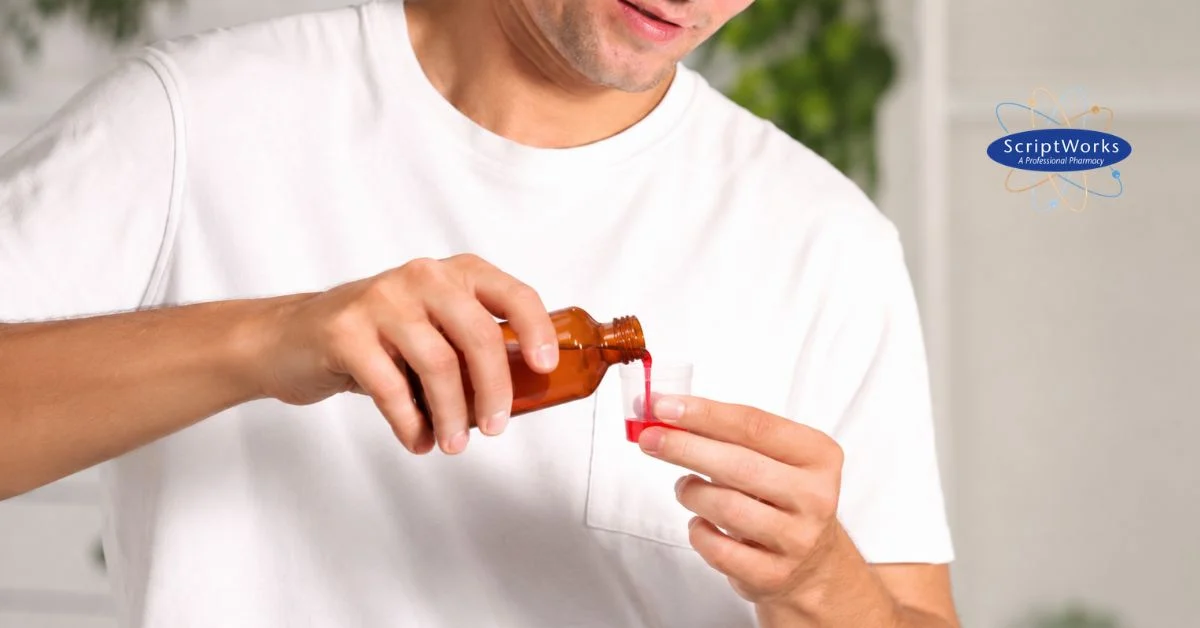
Magic mouthwash is a compounded prescription oral rinse that may be considered for patients experiencing mouth sores, oral irritation, or discomfort associated with conditions such as oral mucositis. Formulations vary depending on the patient’s needs and the prescriber’s clinical goals.
At ScriptWorks, our compounding pharmacists collaborate with California prescribers to discuss ingredient options, formulation considerations, and patient-specific needs. With over 20 years of compounding experience, ScriptWorks provides pharmacist consultations, customized preparations, and statewide prescription shipping.
What Is Magic Mouthwash?
Magic mouthwash is a compounded oral rinse that combines multiple ingredients in one prescription. The formulation varies depending on the patient’s symptoms and the prescriber’s clinical goals.
One of the most common Magic Mouthwash formulations available through ScriptWorks contains:
- Lidocaine: A local anesthetic that may temporarily numb sensitive oral tissues.
- Diphenhydramine: An antihistamine that may contribute local anesthetic properties.
- Antacid: Commonly included as a coating or suspension component.
The combination may provide temporary comfort for patients experiencing oral discomfort. Ingredient concentrations, proportions, and administration instructions depend on the individual prescription.

What About Viscous Lidocaine?
Viscous lidocaine means lidocaine in a thick liquid form.
- Lidocaine is a numbing medication that temporarily blocks pain signals.
- Viscous describes its thick, syrup-like consistency.
It’s used to relieve pain from sores or irritation in the mouth or throat.
Viscous lidocaine 2% is commonly used in certain magic mouthwash formulations for its local anesthetic properties. Although the previously reported national shortage was resolved in May 2026, availability may still vary by supplier.
ScriptWorks pharmacists can consult with California prescribers about ingredient availability, formulation considerations, and patient-specific compounding options when prescribing an oral rinse.
Why Is Magic Mouthwash Prescribed?
Prescribers may consider a compounded oral rinse when patients experience painful or irritated oral tissues.
Clinical circumstances may include:
- Cancer-related oral mucositis: Mouth discomfort associated with chemotherapy or radiation therapy.
- Painful oral ulcers: Including canker sores and other localized oral irritation.
- Medication-associated stomatitis: Oral inflammation associated with certain medications.
- Other oral conditions: When a prescriber determines that a compounded combination may be appropriate.
Magic mouthwash formulations are not interchangeable. Ingredient selection should reflect the patient’s clinical needs, and a lidocaine-based rinse does not address every possible underlying cause of oral discomfort.
What Does Clinical Research Say?
Published research has examined specific magic mouthwash formulations, particularly in patients experiencing cancer-related oral mucositis.
A 2019 randomized clinical trial evaluated diphenhydramine-lidocaine-antacid mouthwash in patients with radiotherapy-related oral mucositis. Researchers observed a statistically significant reduction in reported pain during the first four hours compared with placebo. However, the difference did not reach the study’s predefined threshold for clinical importance. The findings support further evaluation of this specific formulation, rather than establishing equivalent outcomes for all magic mouthwash prescriptions.
A 2025 review published in the Journal of Pain Research discussed lidocaine-based rinses and multi-ingredient mouthwashes among approaches considered for oral mucositis-related pain. The authors also highlighted the importance of evaluating clinical evidence for individual formulations.
Another 2019 Phase II study in The Oncologist investigated a different, steroid-containing mouthwash formulation for everolimus-associated stomatitis. This research illustrates why the specific ingredients and clinical indication matter when reviewing compounded mouthwash literature.
These studies provide clinical context, but they do not establish the safety or clinical benefit of every compounded magic mouthwash preparation.
Why California Prescribers Work With ScriptWorks
ScriptWorks has prepared customized medications since 2003 and works with physicians, oncologists, dentists, ENT specialists, and other licensed California healthcare providers.
Prescribers have access to:
- PCAB and ACHC accreditation: ScriptWorks maintains compounding pharmacy accreditations, reflecting its adherence to established accreditation standards.
- Patient-specific compounding: Pharmacists can review prescribed ingredients, strengths, and formulation requirements.
- Direct pharmacist support: Practices can contact the pharmacy team to discuss prescription details or clarify an order.
- Online Provider Portal: Submit prescriptions, manage refills, and communicate with the pharmacy without relying exclusively on an EMR system.
- California-wide shipping: Prescription shipping is available throughout California, with weekday local delivery in select East Bay communities.
These services offer California practices a way to coordinate individualized compounded prescriptions with a pharmacy experienced in preparing nonstandard formulations.
How to Prescribe Magic Mouthwash Through ScriptWorks
California prescribers can send a patient-specific prescription directly to ScriptWorks, send in our customized prescription order forms, or use the online Provider Portal for fast and easy prescription management for your patients.
For a complete prescription, specify:
- Ingredients and concentrations or proportions
- Quantity and dose volume
- Frequency and duration
- Administration instructions, including whether to swish and spit, gargle, or swallow, when appropriate
Once received, ScriptWorks pharmacists review the order and contact the prescriber if clarification is needed. The pharmacy can also provide current pricing, preparation information, and available delivery options.
Prescriber resources:
ScriptWorks Compounding Pharmacy
480 North Wiget Lane, Walnut Creek, CA 94598
Phone: (925) 934-4400
Frequently Asked Questions About Magic Mouthwash
Will it be covered by insurance?
Maybe. ScriptWorks accepts most insurances including Medi-Cal and sometimes can get insurance to cover the prescription. If not, we don’t fill the prescription until we have gone over the cost with the patient and they have approved it.
Does magic mouthwash require a prescription?
Yes. Compounded magic mouthwash requires a valid prescription from a licensed healthcare provider. Because formulations vary, prescriptions should specify the ingredients, strengths, quantity, and administration instructions.
Can magic mouthwash be customized for individual patients?
Yes. As a compounding pharmacy, ScriptWorks can prepare patient-specific formulations based on a prescriber’s order. Our pharmacists can discuss ingredient options and formulation considerations with California prescribers before a prescription is finalized.
Is there a standard formula for magic mouthwash?
No. Magic mouthwash is not a single standardized medication. Common formulations may contain lidocaine, diphenhydramine, and an antacid, while others include different ingredients depending on the prescriber’s clinical goals.
How can California prescribers order magic mouthwash from ScriptWorks?
Prescribers can submit prescriptions directly to ScriptWorks or through the online Provider Portal. Our pharmacists review each order and can contact the prescriber when clarification is needed. ScriptWorks also offers prescription shipping throughout California.
Can ScriptWorks pharmacists help prescribers select a magic mouthwash formulation?
ScriptWorks pharmacists can consult with prescribers about available ingredients, concentrations, formulation considerations, and patient-specific compounding needs. Final prescribing decisions remain with the licensed healthcare provider.
References
- Sio TT, Le-Rademacher JG, Leenstra JL, et al. Effect of doxepin mouthwash or diphenhydramine-lidocaine-antacid mouthwash vs placebo on radiotherapy-related oral mucositis pain: The Alliance A221304 randomized clinical trial. JAMA. 2019;321(15):1481–1490. Link
- Villa JF, Strang A, Owolabi A, Ramirez MF. Addressing pain in oral mucositis: Narrative review of current practices and emerging treatments. Journal of Pain Research. 2025;18:3723–3741. Link
- Jones VE, McIntyre KJ, Paul D, et al. Evaluation of miracle mouthwash plus hydrocortisone versus prednisolone mouth rinses as prophylaxis for everolimus-associated stomatitis: A randomized phase II study. The Oncologist. 2019;24(9):1153–1158. Link