
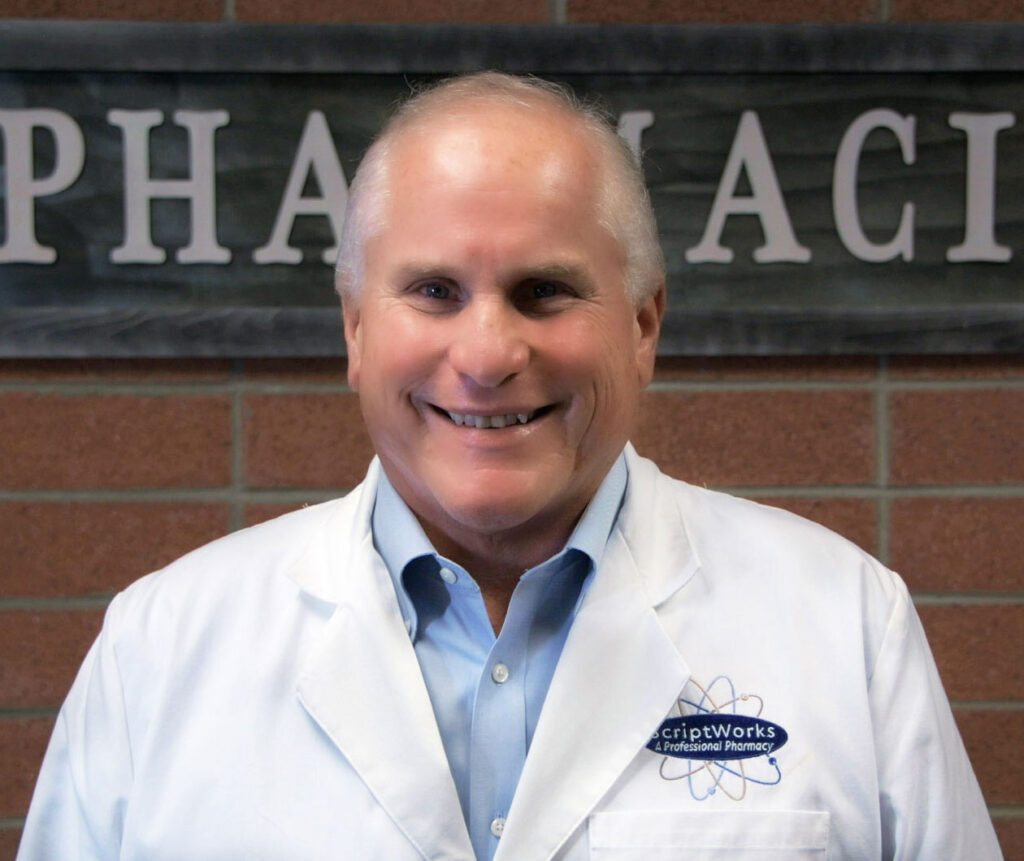
Author: Bob Brensel | President, Pharmacist | ScriptWorks
Bob Brensel, RPh, earned his Pharmacy Degree at University of the Pacific in Stockton, California in 1980. Former California Pharmacists Association’s Award Winner for Recognition of Outstanding Achievement in Compounding Pharmacy. Read More →
Key Takeaways
- Why LDN may require compounding: Commercially available naltrexone does not provide the smaller, ready-to-use oral strengths commonly prescribed for low dose naltrexone (LDN), such as 0.5 mg to 4.5 mg.
- Conditions where LDN may be prescribed: Clinical studies and recent reviews have explored LDN in chronic pain, fibromyalgia, autoimmune and inflammatory conditions, and dermatological disorders. These applications remain off-label.
- Available formulations: ScriptWorks prepares compounded LDN capsules, oral liquid, sublingual drops, topical cream, and titration kits according to patient-specific prescriptions.
- For CA prescribers: Easily prescribe via ScriptWorks Provider Portal, submit LDN prescription forms, discuss custom strengths and titration options, and connect with ScriptWorks pharmacists.
- For CA patients: Learn how to fill an existing LDN prescription, request pricing, arrange California shipping, or manage refills.
Why Low Dose Naltrexone Requires a Compounding Pharmacy
Naltrexone is commercially available as a 50 mg oral tablet and a 380 mg extended-release injectable medication. These FDA-approved formulations are used in the management of alcohol and opioid use disorders. However, they are not designed for the substantially smaller doses commonly prescribed as low dose naltrexone (LDN).
LDN prescriptions frequently involve strengths ranging from approximately 0.5 mg to 4.5 mg, which are not commercially available as FDA-approved, ready-to-use oral naltrexone products.

When a prescriber determines that an available manufactured medication does not meet a patient’s specific medical needs, a compounding pharmacy may prepare a patient-specific formulation according to the prescription.
ScriptWorks is a PCAB-accredited compounding pharmacy in Walnut Creek, California, offering compounded LDN capsules, oral liquid, sublingual drops, topical cream, and titration options.
Whether you’re a prescriber exploring LDN formulations or a patient looking to fill an existing prescription, this guide explains available options and how to work with ScriptWorks.
Why Is Compounding Considered for LDN Prescriptions?
Although some commercially available 50 mg naltrexone tablets are scored, they are not manufactured to provide the smaller, precisely measured strengths commonly requested for LDN.
Depending on the prescription, compounding may accommodate:
- Lower strengths: Patient-specific doses such as 0.5 mg, 1.5 mg, or 4.5 mg.
- Titration schedules: Different strengths or liquid concentrations for gradual, prescriber-directed adjustments.
- Alternative dosage forms: Oral liquid for patients who have difficulty swallowing capsules or require smaller measured doses.
- Ingredient considerations: Formulations that account for certain allergies or sensitivities, when appropriate.
What Conditions Are Being Investigated for Low Dose Naltrexone?
Researchers have investigated low dose naltrexone for its potential effects on pain processing, immune signaling, and inflammatory responses.
Clinical studies and recent reviews have examined LDN across chronic pain, autoimmune, inflammatory, and dermatological conditions. The research includes the following areas of investigation.
Chronic Pain and Fibromyalgia
Fibromyalgia is among the more frequently studied off-label applications of oral LDN.
A 2025 systematic review and meta-analysis by Nazir et al., examining five randomized controlled trials, reported lower pain scores among participants receiving LDN compared with placebo.
Similarly, a 2024 systematic review and meta-analysis by Vatvani et al., involving four randomized trials and 222 participants, reported reductions in pain scores and increases in pressure pain thresholds.
These findings have contributed to continued research interest in LDN for fibromyalgia and certain chronic pain conditions.
Autoimmune and Inflammatory Conditions
LDN has also been investigated in autoimmune and inflammatory conditions, including multiple sclerosis and Crohn’s disease.
A 2026 narrative review by Gouda et al., published in Advances in Therapy, evaluated 105 studies involving LDN across chronic pain, autoimmune, neuroimmune, gastrointestinal, dermatological, and other clinical areas.
The review discussed earlier randomized trials that reported changes in selected quality-of-life measures among participants with multiple sclerosis and clinical or endoscopic findings among participants with Crohn’s disease.
These findings have contributed to research interest in LDN for autoimmune and inflammatory disorders.
Inflammatory Skin Conditions
A 2026 clinical review by Zhou et al., published in the Journal of the American Academy of Dermatology, examined research involving LDN in dermatological conditions such as Hailey-Hailey disease, psoriasis, hidradenitis suppurativa, and lichen planus.
The review summarized published reports describing changes in skin involvement, disease activity, and associated symptoms among some participants receiving LDN.
These findings represent another area of ongoing investigation involving LDN and inflammatory conditions.
Scarring Alopecia and Dermatological Itching
Recent systematic reviews have also examined LDN in inflammatory scalp disorders and dermatological itching.
A 2025 systematic review by Bai et al. evaluated published research involving lichen planopilaris and frontal fibrosing alopecia, conditions associated with inflammatory scarring hair loss.
A 2026 systematic review by Pham et al. examined 20 studies involving 205 patients with itching associated with dermatological conditions, including Hailey-Hailey disease. The authors described reported changes in itching among participants in selected studies.
LDN Formulations Available at ScriptWorks
ScriptWorks prepares several compounded LDN formulations according to patient-specific prescriptions. The requested strength, administration method, and individual patient needs help determine which preparation may be appropriate.
LDN Capsules
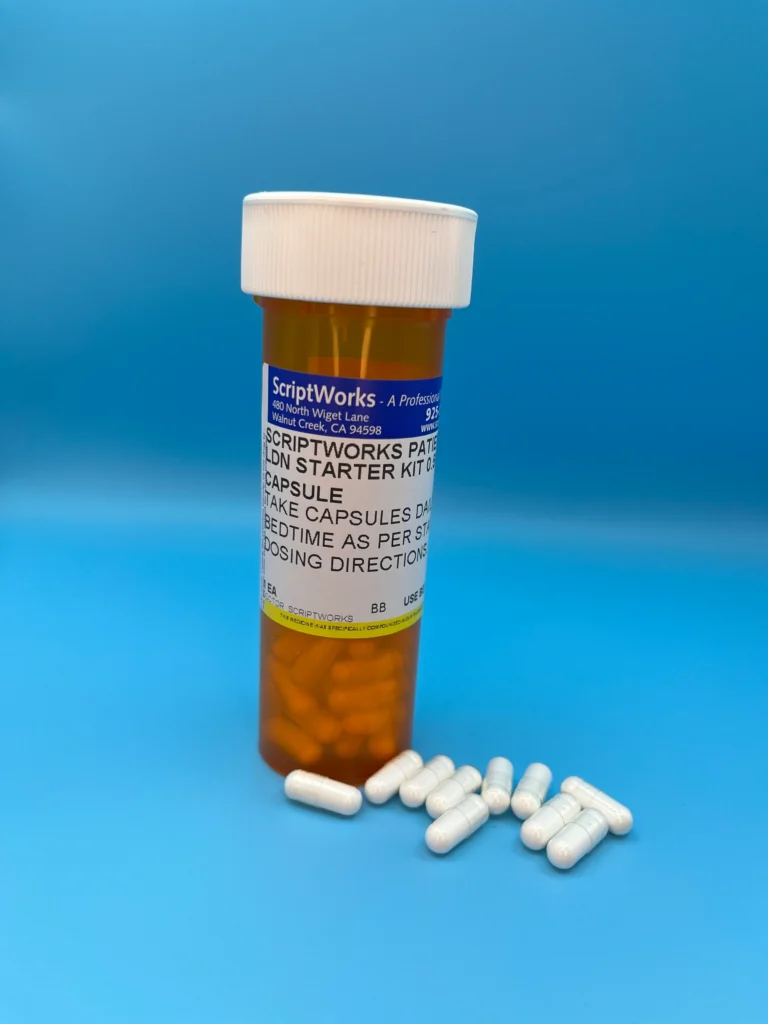
Compounded LDN capsules contain a prescribed amount of naltrexone in each dose.
ScriptWorks prepares strengths including 0.5 mg, 1.5 mg, and 4.5 mg, along with additional strengths when prescribed. Different capsule strengths may also be used during prescriber-directed titration.
LDN Oral Liquid
Compounded LDN oral liquid may be considered when a prescription requires small, measured dose adjustments or when a patient has difficulty swallowing capsules.
Patients should confirm the prescribed dose, liquid concentration in mg/mL, and appropriate measuring device with their pharmacist.
LDN Sublingual Drops
Compounded LDN sublingual drops are administered under the tongue according to the prescription. A prescriber may consider this formulation for specific administration requirements.
LDN Topical Cream
Compounded LDN topical cream is applied to the skin according to the prescription.


LDN Strengths and Titration Options
LDN prescriptions may involve gradual dose adjustments, known as titration. ScriptWorks offers three titration-kit configurations for prescribers to consider.
| Titration Option | Formulation | Starting Approach |
|---|---|---|
| Standard LDN | Capsules | Begins at 1.5 mg daily and progresses to 4.5 mg over seven weeks |
| Slow LDN | Capsules | Begins at 0.5 mg daily and progresses to 4.5 mg over nine weeks |
| Very Low-Dose LDN | Oral suspension followed by capsules | Begins at 0.125 mg daily, transitioning to the 1.5 mg LDN kit in week seven |
Prescribers may also request customized strengths, titration schedules, or maintenance prescriptions based on patient-specific requirements.
For more information, ask our pharmacy team about our Low-Dose Naltrexone (LDN) Titration Kits
What to Look for in a Low Dose Naltrexone Compounding Pharmacy
When choosing a compounding pharmacy for LDN, patients and prescribers should consider four factors:
- Pharmacy licensing: Confirm that the pharmacy holds the appropriate state licenses. California pharmacy credentials can be verified through the California State Board of Pharmacy.
- Accreditation and quality practices: Ask about independent accreditation and adherence to applicable compounding standards.
- Formulation availability: Confirm that the pharmacy can prepare the prescribed strength and dosage form and address prescription-specific questions.
- Prescription services: Review pricing, delivery options, pharmacist access, and refill procedures.
ScriptWorks has maintained accreditation through the Accreditation Commission for Health Care (ACHC) and Pharmacy Compounding Accreditation Board (PCAB) since 2012, with its current accreditation extending through 2027.
Accreditation reflects an independent assessment of pharmacy practices but does not constitute FDA approval of individual compounded preparations.
Learn more about ScriptWorks’ ACHC and PCAB Accreditation.
SCRIPTWORKS
DELIVERS.
Get medications faster with ScriptWorks.
Weekday
Local Deliveries
Walnut Creek, Concord, Martinez, San Ramon, Danville, Alamo, Lafayette and Orinda.

USPS 1st Priority Mail
Overnight Mail Delivery
California (state-wide)
For Prescribers: Compounded LDN Prescription Resources
ScriptWorks works with licensed California practitioners to prepare patient-specific compounded LDN prescriptions.
Prescribers can contact our pharmacy team to discuss available strengths, dosage forms, titration-kit configurations, ingredients, and prescription requirements.
Prescription considerations may include the requested strength, dosage form, administration instructions, titration schedule, and any ingredient allergies or sensitivities.
For oral liquid prescriptions, specifying the dose in milligrams and confirming the preparation’s concentration in mg/mL are important for clear administration instructions.
LDN Prescription Forms and Pharmacy Support
ScriptWorks offers a Provider Portal for licensed prescribers and also LDN prescription order forms that may be faxed or emailed.
Our pharmacists are also available to clarify formulation availability and prescription-specific questions.
Prescriber Resources:
Patients: How to Fill an LDN Prescription in California
If you’ve been prescribed low dose naltrexone, you’ll need a pharmacy that can prepare your prescribed strength and dosage form.
ScriptWorks fills patient-specific compounded LDN prescriptions and offers prescription shipping throughout California.
Already Have an LDN Prescription?
The process generally involves:
- Contact ScriptWorks. Contact our pharmacy with your prescription details and our pharmacy team will confirm the order with your practitioner.
- Have your prescriber submit the prescription. Let your doctor know about our pharmacy and have them reach out. Share this article with them. Our pharmacists can coordinate with your prescriber if additional details are required.
A valid patient-specific prescription from a licensed prescriber is required before compounded medication can be prepared and dispensed. Medications can be delivered directly to patients or can be picked up at ScriptWorks in Walnut Creek, CA. For over 20 years we have been trusted by California practitioners to ship prescriptions quickly to hundreds of patients throughout the state of California.
Interested in LDN but Don’t Have a Prescription?
If you’re researching LDN, discuss your medical history, current medications, and the available research with a licensed practitioner.
Your prescriber can determine whether an LDN prescription is appropriate for your circumstances and specify the strength, dosage form, and administration instructions.
You may also contact ScriptWorks before receiving a prescription to ask about available formulations, ingredients, pricing, and pharmacy services.
Important LDN Safety Considerations
Reported adverse effects associated with LDN are usually minimal and may include vivid dreams, sleep changes, headaches, nausea, and digestive discomfort.
Naltrexone blocks opioid receptors and may interfere with opioid-containing medications, including certain medications used for pain, cough, or diarrhea. It may also precipitate withdrawal in individuals who are physically dependent on opioids.
Patients should inform their prescriber about current or recent opioid use, including tramadol, methadone, or buprenorphine, as well as upcoming medical procedures that may require opioid medications.
Liver-related concerns, medication allergies, and other prescriptions should also be reviewed with a practitioner or pharmacist.
Patients should not stop or adjust prescribed medications without medical guidance.
Contact ScriptWorks About Compounded LDN
Whether you’re a prescriber exploring LDN formulation options or a patient looking to fill an existing prescription, ScriptWorks can provide information about available preparations and prescription requirements.
For Patients: Contact our pharmacists about LDN formulations, prescription filling, pricing, California delivery, or refills.
For Prescribers: Connect with ScriptWorks to discuss available strengths, titration options, patient-specific prescription requests, accessing our provider portal, and LDN prescription order forms.
ScriptWorks Compounding Pharmacy
480 North Wiget Lane
Walnut Creek, CA 94598
Phone: 925-934-4400
Text: 855-445-0304
This article is intended for educational purposes and does not replace individualized medical advice. Compounded medications are not FDA-approved. Patients should consult their prescriber regarding medication decisions, dosing instructions, and potential risks.
References
Bai, J. Q. A., Geng, R. S. Q., Gupta, S., & Donovan, J. (2025). The efficacy and tolerability of low-dose naltrexone in the treatment of lichen planopilaris and frontal fibrosing alopecia: A systematic review. Journal of the American Academy of Dermatology, 93(6), 1638–1640. Study
Gouda, A. H. K., Aitcheson, N. E. C., & Steadman, K. J. (2026). Low-dose naltrexone: What is the evidence? A narrative review. Advances in Therapy, 43(7), 2852–2870. Study
Nazir, M. H., Mehboob, U., Farhan, M., Patel, T., Ahmad, M., Nazir, S., Durrani, T. A., Khafaja, M., Sobhi, A., Kuznetsova, M., Ahmed, M., & Awosika, A. (2025). Efficacy and safety of low-dose naltrexone (LDN) in fibromyalgia: A systematic review and meta-analysis. Annals of Medicine & Surgery, 87(5), 2928–2935. Study
Pham, D., Orestes, G., Kaur, P., Doan, L., & Dao, H., Jr. (2026). Low-dose naltrexone for the treatment of pruritus associated with dermatological conditions: A systematic review. JAAD Reviews. Study
U.S. Food and Drug Administration. (n.d.). Compounding and the FDA: Questions and answers. Link
Vatvani, A. D., Patel, P., Hariyanto, T. I., & Yanto, T. A. (2024). Efficacy and safety of low-dose naltrexone for the management of fibromyalgia: A systematic review and meta-analysis of randomized controlled trials with trial sequential analysis. The Korean Journal of Pain, 37(4), 367–378. Study
Zhou, M. H., Elston, D. M., Morrison, B. W., & Lipner, S. R. (2026). Low-dose naltrexone for treatment of dermatologic conditions: A clinical review. Journal of the American Academy of Dermatology, 94(1), 200–207. Study